



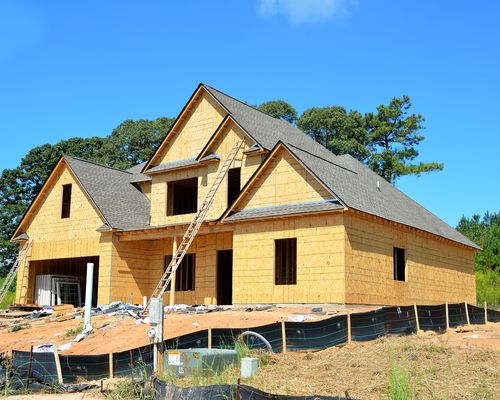
For years, Connecticut's housing conversation has centered on one challenge: there simply are not enough homes to meet demand. Low inventory has driven home prices higher, intensified competition among buyers, and made affordability one of the state's most pressing economic issues.
Today, however, a second question is beginning to take center stage.
Can Connecticut build the housing it desperately needs without overwhelming the roads, utilities, schools, and public services that existing communities already rely on?
It is a question that has become increasingly important as the state moves forward with House Bill 8002, Connecticut's sweeping housing reform law aimed at encouraging more residential development and improving long-term affordability. While many housing advocates see the legislation as an essential step toward solving the state's housing shortage, municipal leaders across several communities are emphasizing that increasing housing supply and expanding infrastructure must go hand in hand.
The discussion reflects a broader reality facing Connecticut.
Few disagree that the state needs more housing. Years of limited construction, combined with steady demand and rising development costs, have left many communities with an inventory shortage that continues affecting buyers, renters, employers, and local economies. Recent housing studies estimate Connecticut still needs well over 100,000 additional homes to better balance supply with demand, a gap that cannot be closed without significant new residential development.
At the same time, communities are asking whether they have the capacity to support that growth.
Every new subdivision, apartment community, condominium project, or mixed-use development increases demand for drinking water, wastewater treatment, roads, schools, emergency services, public transportation, and electrical infrastructure. While new housing creates opportunities for economic growth and helps improve affordability over time, it also requires substantial investment in the systems that allow communities to function efficiently.
That balancing act has become one of the defining challenges of Connecticut's housing strategy.
Several municipalities, particularly in Fairfield County, have expressed concerns that infrastructure planning must keep pace with residential growth. Local officials have pointed to aging water systems, sewer capacity, traffic congestion, and utility limitations as examples of infrastructure that may require upgrades before communities can comfortably accommodate thousands of additional residents.
Those concerns are not unique to Connecticut.
Across the country, rapidly growing communities are facing similar questions about how to expand housing while maintaining reliable public services. The difference in Connecticut is that many towns are already largely developed, leaving fewer opportunities for large-scale expansion without carefully coordinating infrastructure improvements alongside new construction.
Supporters of Connecticut's housing reforms argue that the legislation recognizes those challenges.
Rather than requiring immediate development everywhere, the law encourages municipalities to prepare long-term housing growth plans that identify where additional homes make the most sense. The focus is on directing growth toward areas that already benefit from existing infrastructure, particularly downtown districts, commercial corridors, and neighborhoods located near rail stations and public transportation.
This strategy, commonly known as transit-oriented development, seeks to make better use of infrastructure that is already in place while reducing pressure on undeveloped areas. By concentrating housing near employment centers and transportation networks, communities can often accommodate additional residents more efficiently than through scattered suburban expansion.
Infrastructure planning is also becoming a larger part of the conversation than ever before.
State leaders have acknowledged that expanding housing requires more than changing zoning regulations. Investments in roads, bridges, water systems, wastewater facilities, broadband access, and public utilities are increasingly viewed as essential components of successful housing policy. Without those improvements, even well-designed residential projects can face delays or community opposition.
Developers understand these challenges as well.
While Connecticut continues seeing interest in new apartment communities, mixed-use developments, adaptive reuse projects, and affordable housing initiatives, builders continue facing higher construction costs, financing challenges, labor shortages, and infrastructure expenses. Extending utility lines, upgrading sewer capacity, improving intersections, or constructing stormwater systems can add millions of dollars to project costs before the first home is ever completed.
For homebuyers, these issues often remain invisible until they influence prices.
Infrastructure costs are ultimately reflected in the price of new homes, apartment rents, and commercial development. As construction expenses continue rising, developers must balance affordability with the financial realities of delivering new housing in today's market.
Yet delaying housing construction carries its own consequences.
Connecticut's limited inventory continues placing upward pressure on home prices across much of the state. Buyers frequently encounter multiple-offer situations, while renters face limited availability in many communities. Employers have also expressed concern that housing affordability is affecting workforce recruitment, with some workers choosing opportunities in neighboring states where housing options may be more accessible.
The challenge, therefore, is not choosing between housing and infrastructure.
It is ensuring they advance together.
Communities that successfully coordinate infrastructure improvements with responsible residential growth are often better positioned to support long-term economic development. Modern utilities, reliable transportation, quality schools, and efficient public services not only improve quality of life but also make new housing more attractive to buyers, renters, and businesses alike.
Connecticut's housing reforms provide municipalities with greater flexibility to develop comprehensive housing strategies while also offering grants and incentives that can support planning and infrastructure improvements. Although implementation will vary from one community to another, the law reflects a growing recognition that housing policy must consider far more than zoning alone.
For real estate professionals, the discussion offers an important reminder that the future of Connecticut's housing market will be shaped by more than mortgage rates or inventory levels.
Planning decisions made today will influence where homes are built, how communities grow, and which markets experience the strongest investment over the next decade. Areas capable of expanding infrastructure while supporting new residential development may become some of the state's most active real estate markets, while communities facing greater infrastructure limitations could experience slower growth.
Connecticut has reached an important turning point.
The state has acknowledged that increasing housing supply is essential to improving affordability, strengthening local economies, and supporting future generations. At the same time, municipal leaders are making it clear that successful growth requires careful planning and sustained investment in the infrastructure that supports every neighborhood.
The conversation is no longer about whether Connecticut should build more housing.
The focus has shifted to how the state can build smarter—creating communities where new homes, reliable infrastructure, and long-term economic growth move forward together.
If Connecticut can successfully strike that balance, it will be better positioned to address its housing shortage while preserving the quality of life that continues to make its communities attractive places to live, work, and invest.
Discussion
Thoughts from readers and local market watchers.