



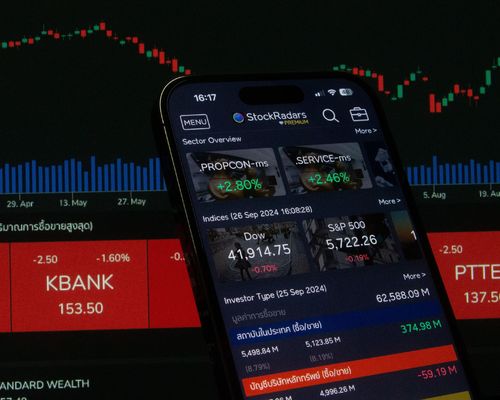
Global equity markets found renewed momentum on Thursday after a sharp recovery in semiconductor stocks helped restore investor confidence, offering a welcome break from the volatility that has dominated trading over the past week. Technology shares led gains across Asia, with Japan and South Korea posting some of the strongest performances of the session, as investors stepped back into artificial intelligence-related companies following a wave of profit-taking that had pressured the sector earlier in the week.
While the rebound provided some optimism, the broader market story remains far more complex. Investors are weighing improving sentiment in the technology sector against rising geopolitical tensions, higher oil prices, and renewed concerns that inflation could remain elevated for longer than previously expected. The result is a market that continues to reward selective buying while punishing complacency.
Japan's Nikkei 225 climbed more than 2%, while South Korea's KOSPI surged nearly 4%, driven largely by a recovery in major semiconductor manufacturers. The rally followed reports that China may allow limited purchases of advanced artificial intelligence chips, easing fears that export restrictions could become even more restrictive and disrupt the global semiconductor supply chain further. The news also helped lift shares of major U.S. chip companies during overnight trading, reinforcing the belief that demand for AI infrastructure remains fundamentally strong despite recent market turbulence.
The semiconductor industry has become one of the defining drivers of the global stock market over the past two years. Artificial intelligence applications continue to require enormous computing power, fueling unprecedented demand for advanced processors, high-bandwidth memory, networking equipment, and cloud infrastructure. Companies supplying these technologies have experienced extraordinary earnings growth, pushing valuations to levels that have also increased investor sensitivity to any negative headlines.
That sensitivity became evident earlier this week when concerns surrounding export controls, competitive pressures, and lofty valuations triggered a broad sell-off across chipmakers. The recovery on Thursday demonstrates that investors still view artificial intelligence as a long-term structural investment theme rather than a short-term trend. However, it also highlights just how dependent market performance has become on a relatively small group of technology companies.
One lesson investors should continue to remember is that leadership concentrated in a handful of mega-cap technology firms creates both opportunity and risk. Strong earnings or favorable policy developments can quickly lift entire indexes, while disappointing news from the same companies can produce equally sharp declines.
Beyond technology, however, financial markets continue facing much larger macroeconomic challenges.
Oil prices have climbed significantly this week following renewed military tensions in the Middle East, raising fresh concerns that higher energy costs could reverse recent progress on inflation. Brent crude briefly moved above $80 per barrel before easing slightly, while analysts continue monitoring shipping activity through the Strait of Hormuz, one of the world's most critical energy transportation routes. Rising oil prices have historically filtered through the economy by increasing transportation, manufacturing, and consumer costs, making inflation more difficult for central banks to control.
Those concerns are already influencing bond markets. Government bond yields have risen across several major economies as investors reassess how long central banks may need to maintain restrictive monetary policies. Higher bond yields increase borrowing costs for businesses and consumers alike, while also making fixed-income investments more attractive relative to equities. That shift in capital allocation can place additional pressure on stock valuations, particularly among high-growth technology companies whose future earnings are more sensitive to changes in interest rates.
For the Federal Reserve, this creates another difficult balancing act. Policymakers have made substantial progress in reducing inflation from its peak, but higher energy prices threaten to complicate that progress. If inflation begins moving higher again because of rising fuel costs, the Fed could face renewed pressure to keep interest rates elevated longer than markets currently anticipate.
Investors are increasingly recognizing that the market's outlook no longer depends solely on corporate earnings. Geopolitical developments, energy markets, monetary policy, and global trade have once again become equally important drivers of asset prices. While technology continues to generate impressive revenue growth, broader economic conditions will ultimately determine whether those earnings translate into sustained market gains.
The rebound in semiconductor stocks is therefore encouraging, but it should not be interpreted as confirmation that volatility has ended. Markets remain highly dependent on incoming economic data, central bank communication, and geopolitical developments that can shift investor sentiment almost overnight.
Looking ahead, investors will closely monitor additional developments in the Middle East, inflation data, corporate earnings reports, and any further indications regarding international semiconductor trade. If technology earnings remain strong while inflation stabilizes, equity markets could regain broader momentum during the second half of the year. However, if energy prices continue climbing and inflation expectations deteriorate, recent gains could prove difficult to sustain.
The recovery in chip stocks serves as an important reminder that long-term innovation continues to support global markets. Yet it also underscores an equally important reality: even the strongest growth sectors cannot operate in isolation from the broader economic environment. Sustainable market advances ultimately require both technological leadership and macroeconomic stability, and investors will be watching closely to see whether the second half of 2026 can deliver both.
Discussion
Thoughts from readers and local market watchers.