



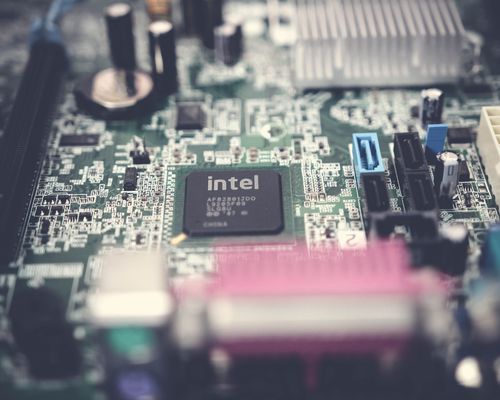
For much of 2026, one of the biggest questions on Wall Street hasn't been whether artificial intelligence is transforming the technology industry—it has been whether the extraordinary pace of investment can continue. That question may become much clearer as Intel prepares to report its latest quarterly earnings, with investors looking for fresh evidence that demand for AI infrastructure remains as strong as it has been throughout the year.
Intel's earnings report arrives at a pivotal moment for the semiconductor industry. The company's stock has climbed nearly 190% this year as investors have grown increasingly confident in its turnaround strategy, driven largely by rising demand for server processors, advanced chip packaging, and the hardware needed to power next-generation artificial intelligence systems. Expectations are high, making this one of the most closely watched technology earnings reports of the summer.
Unlike the early stages of the AI revolution, which were dominated by graphics processors, today's AI expansion is creating demand across the entire computing ecosystem. Every AI model requires more than just GPUs. Massive data centers also rely on high-performance server CPUs, networking equipment, memory, storage, and advanced semiconductor packaging technologies. That broader demand has positioned Intel as one of the companies benefiting from the industry's continued infrastructure buildout.
Analysts expect Intel to report its strongest revenue growth in roughly six years, fueled by renewed demand for data-center processors that support AI workloads. The company has also expanded its contract manufacturing business, winning new commercial partnerships that could strengthen its long-term position against rivals. Investors will be paying close attention to management's outlook for the remainder of the year, as future guidance may prove even more important than the quarterly results themselves.
Another development attracting attention is the growing shortage of enterprise-grade server processors. According to recent reports, demand has become so strong that both Intel and AMD are signing long-term supply agreements with customers, particularly in China, where companies are rushing to secure hardware needed to expand AI services. Lead times have stretched, and prices for some server processors have climbed sharply as demand continues to outpace supply.
Those supply constraints illustrate how quickly artificial intelligence has evolved from a software story into an infrastructure story. Cloud providers, research organizations, financial institutions, healthcare companies, and governments are investing billions of dollars in computing capacity. The result is unprecedented demand not only for AI accelerators but also for every component required to build and operate modern data centers.
Despite the industry's strong momentum, investors remain cautious. Semiconductor stocks have experienced increased volatility in recent weeks as concerns grow that expectations surrounding AI spending may have become overly optimistic. After a powerful rally across the sector, markets are now looking for evidence that revenue growth can justify elevated valuations. Intel's report is expected to provide one of the clearest tests yet of whether enterprise AI investment remains on track or is beginning to moderate.
For Intel, the earnings announcement is about more than quarterly financial performance. It represents another milestone in the company's effort to reestablish itself as one of the industry's most important technology leaders after several challenging years. Continued strength in AI-related demand would reinforce confidence that Intel's turnaround is gaining traction, while softer guidance could raise broader questions about the pace of future investment across the semiconductor sector.
Ultimately, Intel's earnings may offer one of the best snapshots yet of where the AI economy is headed. If demand for processors, advanced packaging, and data-center infrastructure continues to accelerate, it would suggest that the current wave of AI investment remains in its early stages. If growth begins to slow, investors may reassess how quickly the industry can sustain its record-breaking expansion. Either way, Intel's results are likely to shape market sentiment well beyond a single company, providing valuable insight into the next phase of the global AI race.

Discussion
Thoughts from readers and local market watchers.