


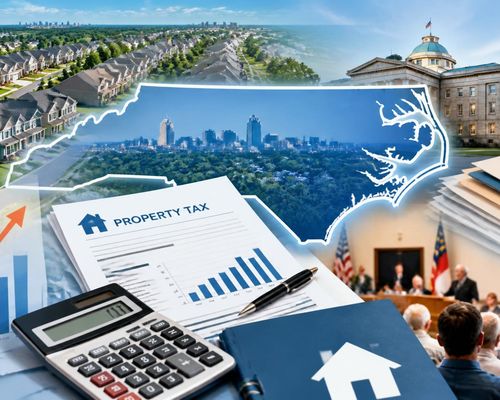
North Carolina is in the throes of a heated debate that could alter the future of homeownership costs, local government funding, and long-term development across the state.
The North Carolina House passed a handful of proposed constitutional amendments this week, including one that would place additional restrictions on how much local governments can raise property taxes over time. The proposal is a major escalation of the state's growing debate over property taxes and a sign that lawmakers are preparing to engage in a larger political battle over affordability and government funding.
At the heart of the conversation is a question many fast-growing states are wrestling with now: How do you shield homeowners from increasing housing costs while also paying for the infrastructure and public services needed to support continued growth?
In North Carolina, that balance is becoming harder and harder to strike.
The Political Issue That Is Property Taxes
North Carolina has seen rapid population growth, strong in-migration from other states, and steep increases in home values in many markets over the past several years.
In cities and counties across the Triangle, the Charlotte region, the Wilmington area and other fast-growing parts of the state, property values have climbed steeply. That has helped many homeowners on paper but has also raised growing concerns about rising property tax bills.
Even if local governments keep tax rates relatively steady, higher property assessments can still send annual tax bills soaring. That increase is tougher for many homeowners to absorb, especially retirees, those on fixed incomes, and long-time owners in neighborhoods that are increasing in value.
Supporters of the amendment say the state needs stronger protections to protect homeowners from being crushed by rising taxes tied to rapidly increasing valuations. Supporters say capping how fast local governments can grow property tax collections would add more predictability and help keep housing costs down at a time housing is becoming more expensive.
The proposal would embed those restrictions directly into the state constitution, making future changes much more difficult.
Local Governments Raise Red Flag
Supporters say the proposal is about protecting taxpayers, but many of the people on the ground see it very differently.
Property taxes are a key revenue source for cities and counties across North Carolina, funding schools, emergency services, transportation improvements, utilities, parks, and infrastructure expansion. In high-growth areas, those needs are growing fast as population growth is placing more pressure on local systems.
Local leaders say strict limits in the constitution could make it harder for them to respond to growth or economic shifts. Critics warn that if revenue growth is capped too tightly, communities might struggle to fund roads, expand utilities, hire teachers, or maintain public safety services at a pace demanded by growing populations.
This is of particular concern in rapidly developing areas. The growth itself often requires a lot of upfront investment before the new tax revenues are fully realized. Critics say limiting future tax flexibility could make it harder to responsibly manage that growth.
Local officials have also warned that cutting one major source of revenue may simply shift financial pressure to other areas, perhaps resulting in higher fees or cuts to public services.
Debate Is Over More Than Taxes
While the issue is being framed largely through the lens of affordability, the implications go well beyond homeowner tax bills.
Property taxes affect nearly every aspect of the real estate industry.
Property taxes also affect monthly ownership costs directly, so tax policy can impact buyer demand and affordability calculations as well. Tax structures are also important to developers, as they affect project viability and operating costs and long-term returns on investment.
“Another big factor is infrastructure funding." New housing development often requires local governments to expand roads, utilities, schools, and emergency services. More limited funding could also influence development timeframes and capacity for growth.
That’s why this debate is getting attention far beyond politics. For many in the housing industry, the proposal is a larger discussion about how North Carolina intends to control growth in the coming decade.
A Reflection of North Carolina’s Growth Patterns
The timing of the debate is not accidental.
North Carolina remains one of the fastest-growing states in the Southeast, drawing new residents, businesses, and investment. "Corporate expansion, migration of people, and demand for housing remain strong in much of the state.
But that growth comes with increased tension around affordability, infrastructure strain, and local governance.
Homeowners want to be spared rising costs. “Local governments need resources to support growing communities. “Developers need infrastructure and predictability to keep building. And lawmakers are increasingly forced to balance those competing interests in real time.
All of those pressures are coming to bear at once in the debate over the property tax amendment.
What Comes Next
But the proposed amendment still has more legislative hurdles to clear before it could eventually go to voters. In North Carolina, constitutional amendments must be approved by both houses of the legislature before being placed on a statewide ballot.
Much of the implementation detail remains opaque even when going further. Questions about how limits would be calculated, what exceptions might exist, and how local governments could respond during periods of rapid growth or economic stress are still likely to become major points of negotiation.
But whatever the final outcome, the debate itself is already shifting the conversation about housing policy and affordability in North Carolina.