
The housing supply shortage continues to be one of the most persistent and frustrating challenges Realtors are facing in 2026. While there have been modest improvements in inventory levels in certain markets, the broader issue remains unresolved—and, more importantly, structural.
This is not a temporary imbalance caused by short-term market conditions. It is the result of years of underbuilding, combined with ongoing constraints such as labor shortages, rising construction costs, and tighter financing conditions for developers.
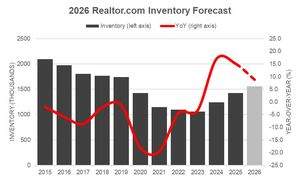
Per Reuters, the U.S. housing market is still short by approximately 4.03 million homes. At the same time, new construction activity has slowed, limiting the pace at which this gap can realistically close.
The Real Challenge Realtors Are Facing
For Realtors, the supply shortage is not just about limited listings—it directly impacts their ability to generate consistent business.
Fewer homes on the market means fewer opportunities to facilitate transactions. Buyers may be ready and qualified, but without suitable inventory, deals simply cannot happen.
This creates several operational challenges:
Increased competition among agents for the same limited listings
Difficulty sourcing properties that meet buyer criteria
More time spent searching, showing, and negotiating for fewer results
Greater reliance on a small number of active listings
At the same time, sellers—aware of limited supply—are often hesitant to list unless they have a clear path to their next home. This creates a bottleneck that further restricts inventory.
And this is where the pressure starts to build.
Even when agents find opportunities in a low-inventory market, getting those deals across the finish line has become more difficult than ever.
👉 Next: Why Deals Are Taking Longer — and Falling Apart More Often →
What Happens If This Isn’t Addressed
When supply remains constrained, transaction volume becomes unpredictable.
Realtors may find themselves with active buyers but no viable properties to show. Deals become more competitive, timelines extend, and frustration builds on both sides of the transaction.
Over time, this can lead to:
Reduced deal flow despite strong demand
Increased pressure to compete on listings
Difficulty maintaining a consistent pipeline
Without adapting to this environment, agents risk becoming overly dependent on market conditions rather than creating their own opportunities.
What Successful Realtors Are Doing Differently
The most effective agents in today’s market are not waiting for inventory—they are actively creating it.
They are shifting from reactive to proactive strategies, focusing on sourcing opportunities that are not immediately visible to the broader market.
Key approaches include:
They are prospecting off-market opportunities, reaching out to homeowners directly, and identifying potential sellers before properties are listed.
They are building long-term seller pipelines, staying in consistent contact with homeowners who may be months—or even years—away from selling.
They are focusing on niche markets, such as investment properties, distressed assets, or specific geographic areas where opportunities may be less competitive.
They are also positioning themselves as advisors to sellers, helping homeowners understand timing, pricing, and strategy in a way that builds trust and encourages action.
The Opportunity: Creating Inventory Instead of Waiting for It
While limited supply restricts traditional deal flow, it also creates an opportunity for agents who are willing to think differently.
Realtors who can consistently identify and secure off-market or early-stage opportunities gain a significant competitive advantage. They are no longer competing solely within the visible market—they are operating beyond it.
This shift—from relying on available listings to actively generating opportunities—is one of the defining characteristics of successful agents in 2026.
A Practical Approach Realtors Can Use Right Now
For agents looking to navigate a low-inventory market more effectively, a few strategic adjustments can make a meaningful difference:
Start by focusing on building relationships with potential sellers before they are ready to list. Consistent outreach and follow-up are key. Becoming a student of effective Real Estate marketing techniques is a must. Many of the most successful Realtors are those who participate in marketing classes and actively reach out to industry mentors. Many have used online courses, such as Mike Costigan’s Agent 1% group, which actively teaches the best ways to market yourself.
Expand your search beyond traditional channels. Off-market opportunities, investor networks, and local connections can often surface deals that are not widely available. One trend we are seeing is Realtors who are learning how to work with Banks to list their foreclosed properties. These niches keep the listings coming in tough times.
Use data and analysis to evaluate opportunities quickly. In a competitive environment, speed and clarity can be the difference between securing a deal and missing it for your client. Many Realtors we interviewed spoke about tools they use to help analyze investment deals quickly (see technology section below), combined with knowledge of creative financing options to help their clients purchase more property.
And most importantly, treat listing generation as an ongoing process—not a one-time effort. In other words, treat your Realtor business as a true business - create systems (leveraging technology) to automate your business and create consistent results.
What’s Next
Limited inventory is only part of the challenge.
The bigger issue?
Even when deals are happening, they’re taking longer — and falling apart more often.
In the next section, we break down why today’s transaction environment is slower, less predictable, and what top agents are doing to keep deals together.
👉 Continue to Part 3 →
Tools & Resources That Can Help
With inventory tight, looking beyond the MLS is key Foreclosure.com or Auction.com can surface off-market and distressed opportunities.
Learn more about Foreclosure.com
DealCheck helps quickly evaluate if they’re worth pursuing. Better data can be your edge in a low-supply market.