



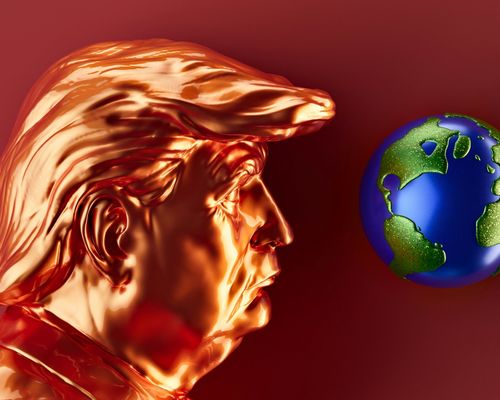
U.S. allies in Asia are closely watching an expected meeting between President Donald Trump and Chinese President Xi Jinping later this month, with Taiwan and Japan particularly concerned about how the two leaders will address Taiwan and broader security issues.
Trump and Xi are expected to meet on September 24, with Taiwan likely to be one of the most sensitive issues on the agenda. The summit comes as Washington and Beijing seek progress on economic relations while tensions remain over trade, technology, military activity and Taiwan.
Taiwan is claimed by China, which considers the island a core national interest and has not ruled out using force to bring it under Beijing's control. The United States does not have formal diplomatic relations with Taiwan but remains its most important international supporter and arms supplier.
Taiwan at the Center of the Talks
Taiwan's government is closely monitoring the upcoming summit because any change in U.S. policy or rhetoric could affect the island's security calculations.
Trump previously described U.S. arms sales to Taiwan as a potential “negotiating chip,” raising concerns among officials in Taipei and Tokyo about whether Washington could make concessions to Beijing as part of a broader economic agreement. Taiwan has been communicating with U.S. officials ahead of the meeting.
Japan is also watching the summit closely. Japanese officials have urged Washington to maintain a clear position on Taiwan as regional tensions continue to increase.
The concerns come as China expands its military capabilities around Taiwan and the wider Indo-Pacific. Beijing has repeatedly opposed foreign military support for Taiwan and has conducted military exercises around the island in recent years.
Economic Interests Add Pressure
The Taiwan issue will be discussed alongside major economic disputes between the world's two largest economies.
Washington and Beijing continue to negotiate over trade, technology and access to advanced semiconductors. The two governments are also seeking agreements that could improve economic ties after years of tariffs and restrictions.
That creates a complicated situation for both sides.
The United States has economic interests in maintaining stable relations with China, while China wants greater access to technology and international markets. At the same time, Washington is attempting to maintain its security relationships with Taiwan and other Asian allies.
Any agreement between Trump and Xi could therefore have consequences well beyond trade.
Regional Allies Are Watching
Japan, South Korea and other U.S. partners are also paying close attention to the summit.
China's growing military and economic influence has increased the importance of U.S. alliances across the region. At the same time, uncertainty over Washington's long-term commitments has prompted some allies to reassess their own security strategies.
Taiwan is particularly important to the global economy because it is a major producer of advanced semiconductors used in smartphones, artificial intelligence systems, automobiles and other technologies.
A serious conflict in the Taiwan Strait could therefore disrupt global trade and technology supply chains.
A senior U.S. diplomat in Taipei recently warned that a conflict across the Taiwan Strait could have major consequences for the global economy and said the Trump-Xi summit provides an opportunity to reduce the risk of misunderstandings.
A Critical Meeting for U.S.-China Relations
The Trump-Xi meeting will take place at a time when tensions between Washington and Beijing extend across several areas, including trade, technology, military policy and regional security.
The outcome of the summit could provide greater clarity on how the two governments intend to manage those disagreements.
For Taiwan and other U.S. allies, the focus will be on whether Washington maintains its existing support for Taiwan while pursuing economic agreements with Beijing.
The September 24 summit is therefore being watched not only as a meeting between two major economic powers, but as an important test of the future direction of U.S.-China relations and security across the Indo-Pacific.

Discussion
Thoughts from readers and local market watchers.