



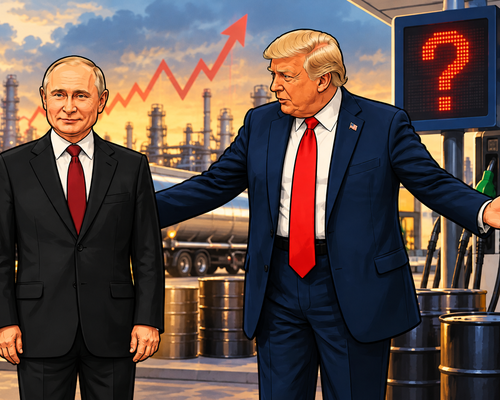
President Donald Trump’s decision to secure diesel supplies from Russia has reopened one of Washington’s most contentious foreign policy debates, raising questions about energy prices, economic security, sanctions enforcement, and the future of U.S. support for Ukraine. Announced just weeks before the November midterm elections, the agreement is intended to increase fuel supplies and ease pressure on American consumers and businesses. However, critics argue that the arrangement could provide Moscow with additional revenue while weakening years of efforts to limit Russia’s ability to finance its war against Ukraine.
The announcement comes at a difficult time for the U.S. economy. Diesel prices have surged amid disruptions to global energy markets associated with the war involving Iran, putting additional pressure on trucking companies, farmers, construction businesses, and other industries that depend heavily on fuel. While the administration is presenting the agreement as a step toward lower energy costs, analysts remain skeptical that additional Russian supplies alone will be enough to produce a significant or lasting reduction in prices.
What the U.S.-Russia Diesel Deal Includes
Trump announced the agreement on October 9 following a conversation with Russian President Vladimir Putin. According to Trump's public statement, Russia would initially supply more than 300,000 metric tons of diesel, followed by another 500,000 tons in November and an additional 1 million tons afterward. He also outlined a further delivery of 3 million tons within a relatively short period. The announced schedule represents a substantial proposed increase in diesel availability, although the precise delivery arrangements, buyers, and commercial terms have not been fully detailed publicly.
The U.S. Treasury Department subsequently issued a temporary general license allowing certain Russian diesel shipments to enter global markets despite existing sanctions. The authorization applies to qualifying fuel that had already been loaded onto tankers by the specified deadline, with the reported exemption extending into April 2027. This is not necessarily a blanket removal of all sanctions against Russian energy exports; its scope depends on the license's conditions.
The move represents a significant change in approach. Since Russia's full-scale invasion of Ukraine in 2022, the United States has pursued policies intended to restrict Moscow's energy revenues and increase the economic cost of continuing the war. The latest agreement introduces a competing priority: obtaining additional fuel supplies at a time when high energy costs are becoming a growing domestic economic and political concern.
Why Diesel Prices Have Become a Major Concern
Diesel is essential to the U.S. economy because it powers much of the country's freight transportation, agricultural machinery, construction equipment, and commercial vehicle fleet. When diesel prices rise, the consequences extend beyond fuel purchases. Trucking companies face higher operating expenses, farmers pay more to run equipment and transport crops, and contractors encounter additional costs for moving materials and operating heavy machinery.
Those expenses can eventually be passed on to consumers through higher prices for groceries, building supplies, and other goods. For the real estate and construction industries, prolonged increases in diesel prices can add pressure to project budgets, transportation costs, and the overall cost of development.
The current supply crunch has been driven in large part by disruptions associated with the U.S.-Israeli war involving Iran, including risks to shipping through the Strait of Hormuz, a critical international energy route. Attacks on energy infrastructure and other supply constraints have compounded the problem. Reuters reported that U.S. diesel prices remained near record levels in early October, even after the administration introduced other measures to expand available supplies.
Trump's agreement with Russia is therefore an attempt to bring additional fuel into a market already struggling with supply disruptions. However, more supply does not automatically translate into substantially lower prices. Transportation costs, refinery capacity, shipping insurance, market expectations, and geopolitical developments all influence the final price paid by businesses and consumers.
Will the Deal Actually Lower Fuel Prices?
The central question is whether Russia can deliver enough additional diesel to make a meaningful difference in the global market.
Energy analysts have expressed doubts about the potential impact. The United States consumes approximately 3.7 million barrels of diesel per day, according to figures cited by Al Jazeera. The initial shipment announced by Trump represents only a fraction of that demand, while the larger proposed deliveries would need to materialize before their overall effect could be assessed.
Russia also faces limitations of its own. Ukrainian attacks on Russian refineries have disrupted production, and Moscow previously restricted diesel exports to protect domestic supplies. Russian officials have indicated that exports could increase, but the country's ability to fulfill the entire proposed schedule remains uncertain.
Even if additional shipments reach international buyers, the fuel may simply be redirected from other destinations rather than representing an equivalent increase in total global supply. That could ease shortages in some locations without producing a substantial decline in prices nationwide.
Markets have already demonstrated how quickly geopolitical risks can overshadow supply announcements. On October 12, oil prices rose despite expectations of additional Russian diesel, as attacks on energy infrastructure and concerns about shipping routes continued to influence traders. Prices subsequently fell in early trading on October 13 as investors reassessed the competing risks. These movements illustrate the uncertainty surrounding the outlook rather than confirming that the agreement has solved the shortage.
For American consumers, the most realistic expectation is the possibility of limited relief if additional fuel reaches the market, rather than an immediate return to lower prices. A sustained decline would likely require broader improvements in global supply, shipping conditions, and refining capacity.
Discussion
Thoughts from readers and local market watchers.