



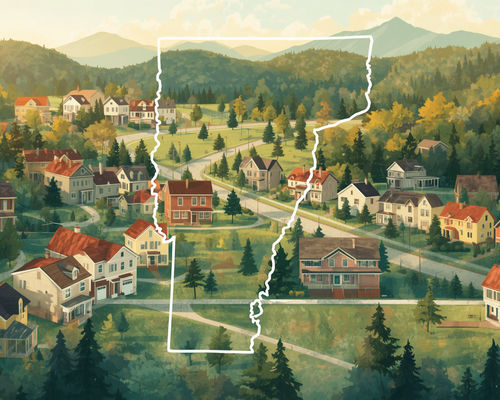
As Vermont moves through 2026, one issue continues to surface in conversations among business leaders, lawmakers, developers, employers, and housing advocates: the state's ongoing housing shortage.
This week, renewed discussion among economic development organizations, housing advocates, and policy leaders has highlighted the growing connection between housing availability and Vermont's long-term economic future. The debate is no longer focused solely on rising home prices or low inventory. Instead, it has evolved into a broader conversation about workforce recruitment, business expansion, population growth, and the state's ability to remain competitive in the years ahead.
Housing Becomes an Economic Issue
For many years, housing shortages were often viewed as a challenge primarily affecting homebuyers and renters. Today, however, Vermont's housing supply constraints are increasingly being viewed as one of the state's most significant economic development obstacles.
Employers across multiple industries continue reporting difficulties attracting and retaining workers. Healthcare organizations, manufacturers, schools, hospitality businesses, and construction companies have all pointed to housing availability as a major barrier when recruiting employees.
The challenge is straightforward: even when good jobs are available, potential workers often struggle to find housing within a reasonable distance of those jobs. In some cases, prospective employees decline opportunities altogether because they cannot secure affordable housing nearby.
Business groups have repeatedly warned that this dynamic is limiting economic growth and making it harder for Vermont employers to compete for talent.
The Impact on Younger Vermonters
The housing shortage is also becoming an increasingly important demographic issue.
Many communities are concerned that younger residents are finding it difficult to establish long-term roots in Vermont. Rising housing costs, limited inventory, and affordability challenges have created barriers for first-time buyers and younger households hoping to enter the market.
For many young professionals and families, purchasing a home has become significantly more difficult than it was just a decade ago. Even as inventory has improved slightly in 2026, affordability remains a challenge in many regions of the state.
Housing advocates argue that if younger residents cannot find attainable housing opportunities, Vermont could face longer-term population challenges, particularly as older demographics continue to represent a larger share of the state's population.
This concern has become a central part of discussions about Vermont's future workforce, economic vitality, and community sustainability.
Why Housing Production Remains the Focus
The continued debate surrounding housing supply stems from a growing consensus among many policymakers and industry leaders that increasing housing production is essential.
Over the past several years, Vermont has launched multiple initiatives aimed at addressing supply constraints. Communities have pursued new development projects, infrastructure investments have expanded, and lawmakers have considered reforms designed to make housing construction easier and more predictable.
Yet despite these efforts, many housing experts continue to argue that Vermont remains thousands of homes short of what is needed to adequately support residents, workers, and future growth.
As a result, nearly every major housing policy discussion currently taking place in the state revolves around one central goal: creating more homes.
Act 181 and the Future of Development
One of the most closely watched housing discussions remains the implementation of Act 181 and related modernization efforts connected to Vermont's land-use framework.
Supporters argue that regulatory reforms can help direct growth into appropriate locations while reducing barriers that have historically slowed housing development.
The debate has attracted significant public attention because the outcome could influence where future housing gets built, how quickly projects move through approval processes, and how communities balance growth with environmental protections.
For developers, planners, and real estate professionals, these policy discussions are particularly important because they help shape the future housing pipeline.
Infrastructure Emerging as a Key Piece of the Puzzle
Another major topic receiving attention is infrastructure.
Even when communities support new housing, many towns face practical limitations involving roads, water systems, wastewater capacity, and other infrastructure needs. Without adequate infrastructure, housing projects can be difficult or impossible to build.
Programs such as Vermont's Community Housing Infrastructure Program (CHIP) have been designed specifically to address these challenges by helping municipalities finance improvements that support residential development.
Many housing advocates believe infrastructure investments will play a critical role in determining how quickly new housing can come online throughout the state.
Modular and Innovative Housing Solutions Gain Momentum
The housing conversation is also expanding beyond traditional construction methods.
State leaders and housing organizations have increasingly explored modular housing, prefabricated construction, ready-to-build home catalogs, and other innovative approaches designed to reduce costs and accelerate development timelines.
These solutions are receiving attention because they may help address two persistent challenges simultaneously: high construction costs and labor shortages.
While no single strategy is expected to solve Vermont's housing shortage on its own, many experts believe a combination of traditional development and alternative housing models will be necessary to close the supply gap.
A Market That Is Improving — But Still Undersupplied
One reason the housing debate remains so active is that recent market improvements have not fully resolved the underlying issue.
Inventory levels have improved compared to the historic lows experienced during the pandemic housing surge. Buyers generally have more options, bidding wars are less common, and the market has become more balanced.
However, those improvements exist alongside continued affordability challenges and strong demand.
In many communities, well-priced homes still attract significant interest, while workforce housing and affordable rental units remain in particularly short supply.
As a result, many housing leaders argue that Vermont's market should not be viewed as fully recovered from its supply challenges.
Instead, they see the state as being in the early stages of a longer-term effort to rebuild housing inventory.
Discussion
Thoughts from readers and local market watchers.