


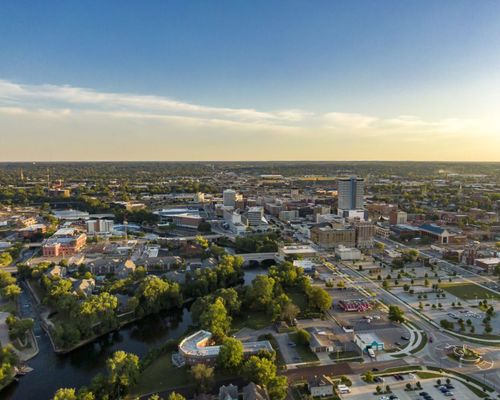
A quiet but powerful shift is taking place in the U.S. housing market—one that is changing where demand is going and what buyers are prioritizing. After years of dominance by high-growth coastal and Sun Belt cities, a new set of markets is rising to the top, and they are not where most people expected.
According to a new 2026 housing market ranking, Midwestern industrial cities—many long overlooked—are now among the most in-demand places to buy homes. Cities like South Bend, Indiana; Akron, Ohio; and Flint, Michigan are seeing renewed interest from both buyers and investors, driven by affordability, economic stability, and shifting long-term risk considerations.
This marks a meaningful change in the direction of the housing market—one that reflects deeper economic and social forces reshaping buyer behavior.
A Comeback Story for the Midwest
Many of the cities now gaining attention share a similar history. Often referred to as part of the “Rust Belt,” these regions experienced decades of industrial decline, population loss, and economic restructuring. For years, they were largely absent from national housing conversations.
That is now changing.
Markets like South Bend have successfully rebuilt around education, healthcare, and technology, with institutions such as the University of Notre Dame playing a central role in local economic growth.
Akron and Flint are seeing similar transformations, with healthcare systems and regional employers providing more stable job bases. These industries have proven resilient in recent years, helping attract both workers and homebuyers looking for long-term stability rather than rapid growth.
In many ways, these cities are benefiting from a “second look” by buyers who are reconsidering what makes a market attractive.
Affordability Is Driving the Shift
At the core of this trend is one overriding factor: affordability.
Home prices in these Midwestern markets remain significantly lower than in coastal cities or major metro areas. In many cases, buyers can purchase homes for a fraction of the cost of properties in places like California, Florida, or New York.
This price gap has become increasingly important as mortgage rates have risen and affordability has tightened nationwide. Buyers who were previously priced out of larger markets are now turning to regions where homeownership is still within reach.
This shift is not limited to first-time buyers. Investors are also moving into these markets, attracted by lower entry costs and the potential for rental income and long-term appreciation. In Flint, for example, investor activity has surged, contributing to sharp price increases and a rapid rise in market ranking.
Climate Risk Is Becoming a Major Factor
Another key driver behind this trend is something that has only recently become a major consideration: climate risk.
Buyers are increasingly factoring in the long-term costs and risks associated with extreme weather events. Coastal and Sun Belt markets, which face higher exposure to hurricanes, wildfires, flooding, and extreme heat, are becoming more expensive—not just in terms of home prices, but also insurance and maintenance.
In contrast, many Midwestern cities face lower exposure to these climate-related risks, making them more attractive from a long-term perspective.
This shift in thinking reflects a broader change in how buyers evaluate real estate. It is no longer just about location and price—it is also about resilience and long-term sustainability.
A Broader Migration Trend Is Taking Shape
The rise of Midwestern markets is part of a larger migration pattern that has been developing over the past few years.
While the pandemic initially drove movement toward Sun Belt states, rising housing costs in those regions have begun to reverse the trend. Buyers are now looking for markets that offer a better balance between affordability, quality of life, and economic opportunity.
Cities in the Midwest are increasingly meeting that demand.
In many cases, buyers are trading expensive urban living for more space, lower costs, and access to stable job markets. This is especially true for remote and hybrid workers, who have greater flexibility in choosing where to live.
As a result, regions that were once considered secondary markets are becoming primary destinations.
Not Without Challenges
Despite the growing interest, these markets are not without risks.
In cities like Flint, rapid investor activity has raised concerns about affordability for residents, with rising home prices and rents beginning to price out long-time communities.
There are also ongoing challenges related to infrastructure, economic inequality, and the long-term sustainability of growth. While these cities are improving, they are still in the process of rebuilding and adapting to new economic realities.
This means that while opportunities exist, they come with complexity.
A Fundamental Shift in Buyer Priorities
What makes this trend particularly significant is what it says about the mindset of today’s homebuyers.
For years, housing demand was driven largely by growth potential—buyers were drawn to fast-growing cities with rising prices and strong appreciation. Today, the focus is shifting toward affordability, stability, and risk management.
Buyers are asking different questions:
- Can I afford this long-term?
- Is this market stable?
- What risks will this property face in the future?
The answers to those questions are increasingly pointing toward markets that were once overlooked.