



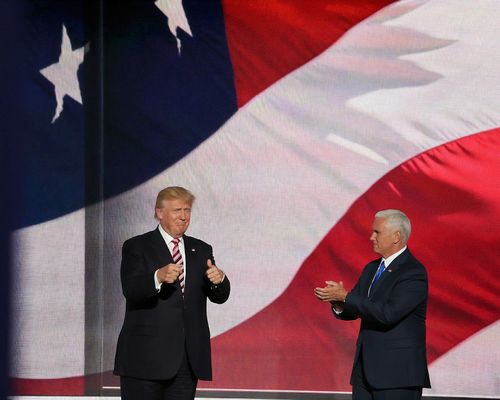
U.S. President Donald Trump and Chinese President Xi Jinping are meeting at the White House on Thursday as the world's two largest economies seek to stabilize relations while continuing to disagree over trade, technology, artificial intelligence and Taiwan.
The meeting is the leaders' second face-to-face meeting of 2026 and comes after months of negotiations aimed at reducing economic tensions between Washington and Beijing. Their discussions are expected to cover trade agreements, technology restrictions, AI, Taiwan and broader security issues.
Trade remains one of the most immediate issues. The United States has pushed China to increase purchases of American goods and address longstanding concerns over market access and trade imbalances, while Beijing has sought greater access to advanced technology and relief from U.S. restrictions.
AI and Technology Take Center Stage
Artificial intelligence has become an increasingly important part of the U.S.-China relationship.
Washington has tightened controls on exports of advanced semiconductors and AI technology to China, citing national security concerns. Beijing, meanwhile, is investing heavily in domestic chip production and AI development to reduce its reliance on foreign technology.
The two countries are also competing over the computing infrastructure needed to develop increasingly powerful AI systems.
The outcome of the technology discussions could influence the global semiconductor industry, affecting chip manufacturers, data-center operators and companies that depend on advanced computing equipment.
Taiwan Remains a Sensitive Issue
Taiwan is expected to remain one of the most difficult issues between Washington and Beijing.
China claims Taiwan as part of its territory and has not ruled out using force to bring the island under Beijing's control. The United States does not formally recognize Taiwan as an independent country but maintains close unofficial relations and provides the island with defensive weapons.
Beijing has repeatedly opposed U.S. arms sales to Taiwan and American military activity in the region.
For Washington's Asian allies, the summit is also being closely watched for any changes in U.S. policy toward Taiwan.
Defense and Regional Security
The talks come as military activity involving China and the United States continues across the Indo-Pacific.
China has expanded its military capabilities and increased activity around Taiwan and in the South China Sea. The United States has continued military exercises and security cooperation with allies including Japan, Australia and the Philippines.
Any agreement between Trump and Xi on managing military tensions could therefore have implications well beyond the two countries.
Economic Stakes
The relationship between the United States and China has major consequences for the global economy.
The two countries are deeply connected through trade and supply chains involving electronics, machinery, consumer goods, energy and technology. Changes in tariffs or export controls can affect companies and consumers far beyond their borders.
Businesses are also watching for signs that Washington and Beijing could reduce some of the uncertainty surrounding trade and technology restrictions.
Even a limited agreement could provide greater clarity for companies making investment and supply-chain decisions.
At the same time, major disagreements over technology, national security and Taiwan are unlikely to disappear following a single meeting.
A Closely Watched Summit
Trump and Xi enter the meeting with significant economic and geopolitical issues on the table.
Trade could produce areas of cooperation, while AI, advanced chips, Taiwan and military activity remain more difficult areas of negotiation.
The summit will therefore be closely watched by governments, businesses and investors around the world.
The immediate focus will be on whether the two leaders can reach practical agreements while preventing their broader disagreements from escalating.
The meeting could provide another opportunity to stabilize U.S.-China relations, but the underlying competition between the two countries over technology, trade and regional security is expected to continue.

Discussion
Thoughts from readers and local market watchers.