



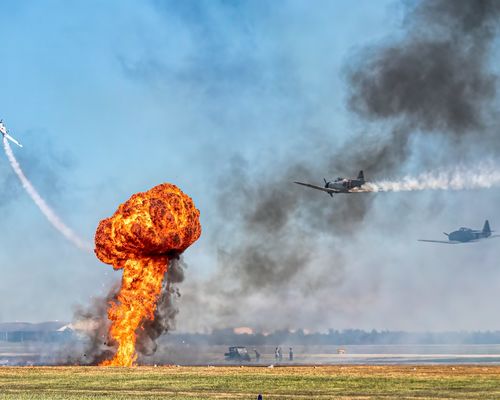
The United States launched a new round of airstrikes against military targets in Iran on Wednesday, marking a significant escalation in the conflict after Iranian forces attempted to strike U.S. military personnel stationed in the Middle East. According to U.S. Central Command (CENTCOM), the operation was carried out in response to the attempted attacks and targeted facilities believed to support Iran's military capabilities.
The latest military action comes just days after hopes for a temporary pause in hostilities had emerged. Earlier this week, diplomatic efforts appeared to gain momentum following reports that both sides were exploring ways to reduce tensions. However, the renewed exchange of military strikes has raised fresh concerns that the conflict could enter another period of escalation, complicating ongoing diplomatic efforts.
U.S. officials said the operation was intended as a direct response to Iran's attempted missile attack on American forces and emphasized that the strikes were focused on military objectives. The renewed campaign underscores Washington's commitment to protecting U.S. personnel and military installations in the region while responding to what officials described as continued threats from Iran.
The renewed fighting has also increased concerns about the security of critical energy infrastructure and maritime trade routes throughout the Middle East. Analysts warn that any disruption affecting the Strait of Hormuz, through which roughly one-fifth of the world's seaborne oil passes, could have immediate consequences for global energy markets. While oil prices have remained volatile, traders continue to monitor developments closely as geopolitical risks increase.
Financial markets reacted cautiously to the latest developments. Investors are weighing the possibility of prolonged regional instability against broader economic conditions, including central bank policy and inflation. Higher energy prices could place renewed pressure on inflation in many countries, potentially influencing borrowing costs, consumer spending, and business investment in the months ahead.
International leaders have continued calling for restraint and renewed diplomatic engagement to prevent the conflict from expanding further. Several governments have urged both sides to avoid actions that could threaten regional stability or disrupt global trade, while diplomatic channels remain open despite the latest military exchange.
Although the immediate objective of the U.S. operation was to respond to recent attacks, analysts say the broader situation remains highly uncertain. Any additional military action could affect global energy supplies, shipping activity, financial markets, and international security, making developments in the Middle East one of the world's most closely watched geopolitical issues.
For now, governments, businesses, and investors around the world will continue monitoring events as both military operations and diplomatic efforts unfold, with the hope that further escalation can be avoided despite the renewed outbreak of hostilities.

Discussion
Thoughts from readers and local market watchers.