



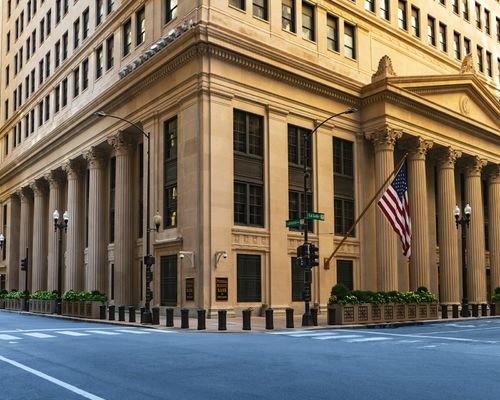
The Federal Reserve left interest rates unchanged on Wednesday, maintaining the federal funds rate at 3.50% to 3.75% following the conclusion of its two-day policy meeting. The decision, which had been widely anticipated by economists and financial markets, reflects the central bank's cautious approach as it continues working to bring inflation back to its long-term 2% target while navigating a resilient U.S. economy. However, the meeting was far from unanimous, as three Federal Reserve governors voted in favor of raising rates by a quarter percentage point, marking the largest number of dissents in decades and highlighting growing debate within the central bank over the appropriate path for monetary policy.
In its post-meeting statement, the Federal Open Market Committee (FOMC) acknowledged that economic activity has continued to expand at a moderate pace while labor market conditions remain solid. Although inflation has eased considerably from the multi-decade highs seen in recent years, policymakers said price pressures remain elevated and continue to pose a challenge to achieving long-term price stability. Officials pointed to recent increases in energy prices, ongoing tariff-related costs and broader inflationary pressures that have slowed progress toward their target. The committee reiterated that future decisions will remain dependent on incoming economic data and emphasized that it is prepared to adjust monetary policy if inflation fails to show sustained improvement.
Federal Reserve Chair Kevin Warsh reinforced that message during his press conference, stressing that while inflation has moved in the right direction overall, the central bank is not yet convinced that the battle has been won. He noted that policymakers remain committed to returning inflation to 2% and will continue evaluating employment, consumer spending, business investment and inflation reports before determining whether additional policy tightening becomes necessary. Warsh also acknowledged that uncertainty surrounding trade policy, tariffs and global economic conditions continues to complicate the inflation outlook, making it essential for the Fed to remain patient while preserving its flexibility.
The decision immediately shifted investors' attention toward the Federal Reserve's September meeting, where policymakers could once again consider raising interest rates if inflation data unexpectedly strengthens. Financial markets are now expected to closely monitor upcoming reports on consumer prices, producer prices, employment growth and wage gains, all of which could influence the central bank's next move. While the Fed chose to keep its benchmark rate unchanged, officials made clear that future policy decisions remain highly data dependent rather than following a predetermined path.
For consumers, Wednesday's announcement means borrowing costs tied directly to the federal funds rate—including many credit cards, home equity lines of credit and some business loans—are unlikely to change immediately. Mortgage rates, however, are expected to continue moving primarily with Treasury yields and broader bond market expectations rather than the Fed's benchmark rate itself. Housing analysts note that while today's decision removes uncertainty surrounding this meeting, mortgage rates will ultimately depend on how investors interpret future inflation trends and the likelihood of additional Federal Reserve action later this year.
Although markets largely anticipated the decision to hold rates steady, the unusually high number of dissenting votes underscored the difficult balancing act facing the Federal Reserve. Policymakers continue to weigh the risk of inflation remaining stubbornly above target against the possibility that keeping interest rates elevated for too long could slow economic growth. As a result, investors, businesses and homebuyers are expected to remain focused on each new economic report over the coming weeks, knowing those figures will play a crucial role in shaping the Fed's next policy decision.

Discussion
Thoughts from readers and local market watchers.