



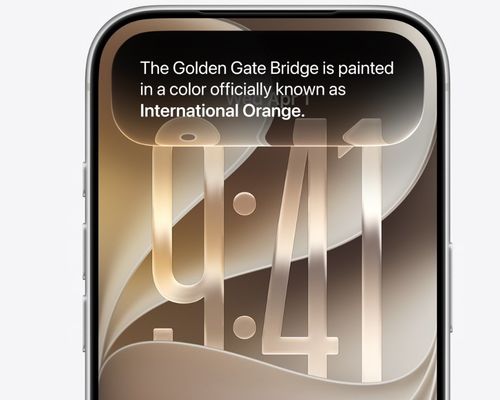
For years, Siri was supposed to be the future of computing.
When Apple first introduced the voice assistant, it represented a bold vision of how people would interact with technology. Users could ask questions, set reminders, send messages, and perform simple tasks using natural language instead of tapping through menus.
But as artificial intelligence rapidly evolved, Siri began to feel increasingly outdated.
While competitors introduced more capable AI assistants that could generate content, understand complex requests, and carry on natural conversations, Apple's voice assistant struggled with many of the same limitations users had complained about for years.
Now, Apple is attempting its biggest Siri transformation since the product first launched.
At its annual Worldwide Developers Conference (WWDC), the company unveiled a major artificial intelligence upgrade designed to make Siri significantly smarter, more useful, and far more integrated into everyday digital life.
The announcement represents one of Apple's most important technology initiatives in years and signals that the company intends to compete aggressively in the rapidly expanding AI market.
A New Generation of Siri
The new version of Siri is designed to move beyond simple voice commands and evolve into a more capable digital assistant.
Rather than responding only to isolated questions, Apple's upgraded AI is intended to understand context, remember information from previous interactions, and help users complete more complex tasks that span multiple applications.
Apple says the assistant can recognize information displayed on a user's screen, understand ongoing conversations, and use data across apps to provide more relevant assistance.
Instead of merely answering questions, the goal is for Siri to become an active participant in helping users navigate daily tasks.
That shift may sound subtle, but it represents a significant change in how Apple views the role of artificial intelligence within its ecosystem.
For years, Siri functioned primarily as a voice-activated shortcut system. The company's latest vision moves much closer to the AI assistants that have emerged over the past several years.
Apple Is Entering a New Competitive Landscape
The pressure on Apple has been building for some time.
Artificial intelligence has quickly become the dominant theme in the technology industry. Companies across Silicon Valley are investing billions of dollars to develop increasingly sophisticated AI systems capable of reasoning, writing, coding, researching, and assisting users in ways that were previously impossible.
Consumers have embraced these tools at a remarkable pace.
As a result, investors have increasingly questioned whether Apple was falling behind in one of the most important technological transitions in decades.
While competitors aggressively showcased their AI capabilities, Apple remained relatively cautious, emphasizing privacy, security, and gradual product integration rather than headline-grabbing demonstrations.
That strategy helped preserve Apple's reputation for reliability, but it also created growing pressure for the company to demonstrate its own AI ambitions.
WWDC provided Apple with an opportunity to answer those questions.
Why Investors Were Watching Closely
The significance of Apple's AI announcement extends well beyond Siri itself.
For investors, the bigger question is whether artificial intelligence can become the next major growth engine for the company.
Apple already generates enormous revenue from iPhones, services, wearables, and software subscriptions. However, many analysts believe the company needs another technological breakthrough to maintain long-term growth.
Artificial intelligence could provide that opportunity.
A more capable Siri could encourage device upgrades, strengthen customer loyalty, increase engagement across Apple's ecosystem, and potentially create entirely new categories of software experiences.
The stakes are particularly high because AI is increasingly becoming a deciding factor in consumer technology purchasing decisions.
If users begin choosing devices based on the quality of their AI assistants, Apple cannot afford to be perceived as lagging behind.
Privacy Remains Central to Apple's Strategy
One area where Apple continues to differentiate itself is privacy.
Unlike some competitors that rely heavily on cloud-based AI processing, Apple has emphasized a hybrid approach that seeks to perform as much processing as possible directly on user devices.
The company argues that personal information should remain private and secure while still allowing users to benefit from advanced artificial intelligence features.
This approach reflects Apple's broader philosophy of integrating AI without sacrificing user trust.
Whether consumers view privacy as a meaningful advantage in the AI era remains an open question, but Apple clearly believes it can help distinguish the company from competitors.
The Challenge Ahead
Despite the excitement surrounding the announcement, Apple's AI journey is only beginning.
Building a truly intelligent assistant remains one of the most difficult challenges in technology.
Users have high expectations. They want AI systems that understand context, avoid errors, provide accurate information, and seamlessly integrate into their daily lives.
Meeting those expectations consistently is far more difficult than demonstrating impressive capabilities during a keynote presentation.
The technology industry is filled with examples of products that generated enormous excitement before struggling to deliver on ambitious promises.
Apple's challenge now is proving that its vision can work at scale across hundreds of millions of devices worldwide.
The Beginning of Apple's AI Era
Perhaps the most important takeaway from WWDC is not any individual feature but what the event represents.
For years, Apple was viewed as an observer in the artificial intelligence race while rivals dominated headlines with increasingly powerful AI models.
That perception is beginning to change.
The company is making it clear that artificial intelligence will play a central role in the future of its products, services, and software ecosystem.
Whether Apple's approach ultimately succeeds remains to be seen, but one thing is becoming increasingly obvious: the competition for AI leadership is no longer limited to startups and software companies.
It now includes one of the world's most valuable and influential technology companies.
And with Siri receiving its most significant upgrade in years, Apple has officially entered the next phase of the AI race.

Discussion
Thoughts from readers and local market watchers.