



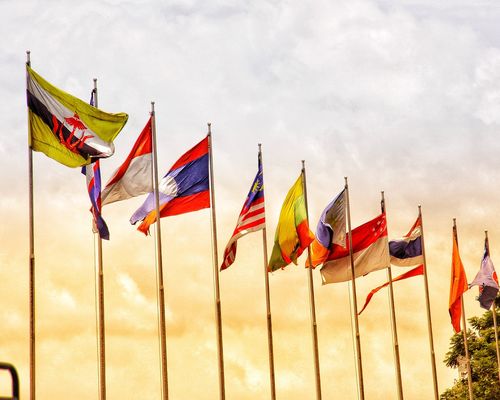
Foreign ministers and senior diplomats from across Asia, Europe, and North America gathered in Manila this week for the ASEAN Regional Forum, where the ongoing conflict in the Middle East emerged as one of the meeting's most pressing issues. While the annual gathering traditionally addresses regional security and economic cooperation, this year's discussions have been dominated by concerns over rising geopolitical tensions, global energy security, and the potential impact on international trade.
The meeting brings together representatives from the 10 member states of the Association of Southeast Asian Nations (ASEAN) along with major international partners, including the United States, China, Japan, South Korea, Australia, Canada, India, and the European Union. The forum serves as one of the region's most important diplomatic platforms for addressing shared security challenges and promoting dialogue between global powers.
A major focus of this year's talks has been the continued fighting in the Middle East and its ripple effects on global energy markets. Diplomats expressed concern that instability surrounding critical shipping routes, including the Strait of Hormuz, could disrupt supplies of oil and liquefied natural gas, increase transportation costs, and place additional pressure on inflation around the world. Many Southeast Asian economies rely heavily on imported energy, making the region particularly sensitive to prolonged disruptions in global supply chains.
In addition to energy security, ministers discussed the importance of protecting international shipping lanes that support global commerce. ASEAN leaders emphasized that maintaining freedom of navigation is essential not only for regional stability but also for the uninterrupted movement of food, fuel, and manufactured goods. Any prolonged disruption to maritime trade could have significant economic consequences far beyond Southeast Asia.
The summit has also provided an opportunity for several high-level bilateral meetings. U.S. Secretary of State Marco Rubio met with Chinese Foreign Minister Wang Yi, with both sides discussing opportunities to stabilize relations and continue diplomatic engagement despite ongoing disagreements over trade, security, and regional issues. Officials described the discussions as constructive and expressed hope that continued dialogue could reduce tensions between the world's two largest economies.
Alongside the Middle East crisis, foreign ministers continued discussions on long-standing regional concerns, including the situation in Myanmar, maritime disputes in the South China Sea, cybersecurity cooperation, and economic resilience. ASEAN leaders reiterated the organization's commitment to resolving disputes through diplomacy while strengthening cooperation on trade, investment, and regional development.
Economic stability remains a central priority for many participating nations. Governments are closely monitoring how geopolitical conflicts could influence inflation, supply chains, and investor confidence during the second half of the year. With many economies still benefiting from strong investment in technology and manufacturing, officials stressed the importance of preventing further disruptions that could slow regional growth.
As the ASEAN Regional Forum continues, diplomats are expected to issue joint statements supporting peaceful dialogue, international cooperation, and the protection of critical trade routes. While the meeting is unlikely to produce immediate solutions to the conflicts dominating this year's agenda, it underscores ASEAN's growing role as a platform for diplomatic engagement at a time when geopolitical uncertainty continues to shape the global economy.

Discussion
Thoughts from readers and local market watchers.