



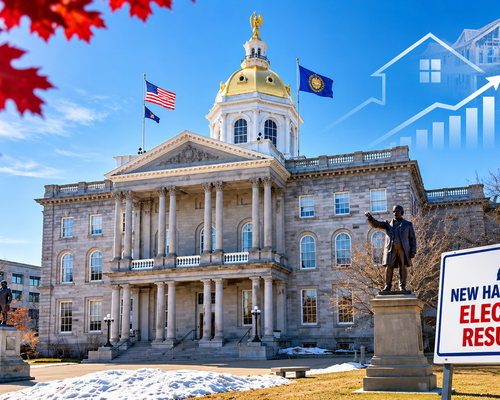
New Hampshire's November 3 election has created a new political landscape that could influence the state's housing market and real estate industry over the next two years. Democrats won control of both chambers of the Legislature, while Republican Gov. Kelly Ayotte secured reelection, setting up a divided government as lawmakers prepare for the 2027 legislative session.
The results give Democrats a majority in the 400-member House and 24-member Senate, while Ayotte will remain in the governor's office. This shift could bring renewed attention to housing affordability, zoning reform, affordable-housing investment, and landlord-tenant regulations.
Housing Affordability Could Return to the Legislative Spotlight
Housing costs were already a major issue throughout the campaign. Before the election, Democratic challenger Cinde Warmington called for greater state investment in affordable housing, including additional support for the Affordable Housing Fund and Housing Champions program.
Ayotte, meanwhile, has emphasized reducing regulatory barriers, speeding up permitting, and encouraging private development to increase the housing supply.
With Democrats now controlling the Legislature, proposals involving public housing investment and additional affordability measures could receive greater attention. However, major spending initiatives will still require negotiations with the governor.
Zoning and Development Rules Could Become Major Issues
New Hampshire's housing shortage has made local zoning and development regulations increasingly important to builders and property owners.
Lawmakers could revisit policies affecting multifamily construction, accessory dwelling units, commercial-to-residential conversions, and municipal permitting. Changes in these areas could influence where developers can build and how quickly projects move through local approval processes.
For developers, the direction of these discussions will matter when evaluating future projects and investment opportunities across the state.
Landlords and Property Investors Could Face New Debates
Landlord-tenant regulations may also become an important area of disagreement. Warmington previously proposed reversing a law allowing landlords to end tenancies when leases expire, subject to applicable legal requirements. She also supported restrictions targeting private-equity firms purchasing residential properties.
These proposals could receive renewed attention under the incoming Legislature, although their passage would depend on negotiations and the governor's position.
What This Means for New Hampshire Real Estate
For buyers, renters, sellers, developers, and investors, the election does not immediately change housing regulations. However, it creates the possibility of a different legislative approach to affordability and development beginning in 2027.
The biggest questions will be whether lawmakers can agree on additional housing funding, make it easier to build new homes, and address the regulatory challenges that affect rental housing and property ownership.
New Hampshire's housing market will be watching closely as the new Legislature takes shape. With housing affordability remaining a major statewide concern, the decisions made in Concord could influence construction, investment, and homeownership opportunities well beyond the next legislative session.
Discussion
Thoughts from readers and local market watchers.