


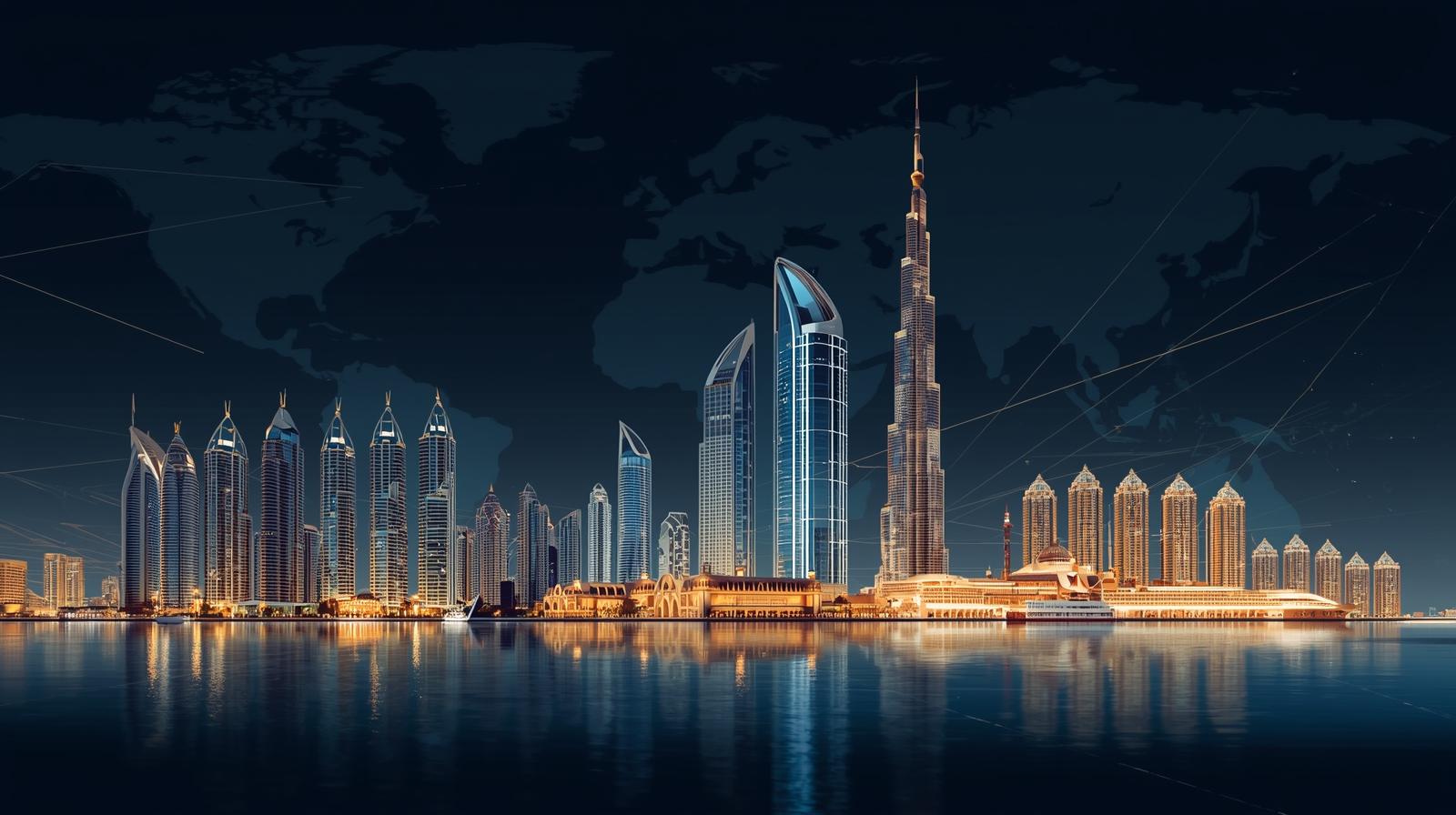
Dubai’s reputation as a destination for international capital and real estate investment is continuing to solidify, reinforced by major property and investment events and broader shifts in global capital flows.
Global Investors Flock to Dubai
Recent industry coverage highlights how Dubai has evolved beyond a regional real estate market into a global wealth and investment hub — drawing investors from Europe, Asia, Africa, and beyond who are looking for both capital appreciation and asset security. Several factors are driving this trend:
- Capital inflows across regions: Investors from Europe and Asia are increasingly directing funds into Dubai’s property markets, including prime and ultra-prime residential segments. The city’s blend of lifestyle appeal, rapid infrastructure development, and global connectivity is a major draw for foreign investors.
- Regulatory and tax advantages: Dubai’s regulatory clarity, tax efficiency, and investor-friendly legal reforms have created a compelling environment for long-term capital deployment. Free zones with tax and residency incentives help position the emirate as a permanent business and lifestyle base rather than just a commercial outpost.
- Diversifying investment flows: Beyond property, capital is flowing into technology, renewable energy, and advanced manufacturing sectors in the United Arab Emirates (UAE), indicating that broader economic diversification supports Dubai’s long-term appeal to global investors.
Summits & Events Cement Global Status
Large international property and investment shows — such as the International Property Show (IPS) and Investopia — are helping reinforce Dubai’s role as a global capital introduction and deal-making platform. These summits attract developers, institutional investors, family offices, and high-net-worth individuals interested in Dubai’s property landscape and wider economic opportunities.
Investopia, in particular, is designed not just as a forum for discussion but also as a marketplace where investment allocators and fund managers actively connect and deploy capital into emerging and established sectors.
Why It Matters for International Investors
For real estate professionals and capital allocators, this shift is significant because:
- Investor demand is broadening beyond local buyers. Dubai’s international profile means that price dynamics, asset liquidity, and development funding increasingly reflect global investment sentiment, not just regional cycles.
- Cross-border capital flows can impact financing conditions. As funds from diverse geographies enter Dubai and the wider Middle East, credit availability and valuations for international investors may see changes — especially in luxury and commercial property segments.
- Dubai’s success feeds back into global real estate themes. Other emerging hubs are likely to take cues from Dubai’s strategy, particularly around regulatory clarity and attractive residency models, influencing how global capital allocates to property markets worldwide.
European Markets Waver as Energy Prices Spike Under Geopolitical Strain
European financial markets have shown heightened volatility and downward pressure as escalating conflict in the Middle East intensifies energy price uncertainty and inflationary concerns.
Energy Price Surges Strain Markets
A surge in energy costs — particularly oil and natural gas — linked to the worsening conflict and disruptions around the Strait of Hormuz has been a central market theme:
- Brent crude oil prices rose sharply, trading significantly higher in recent sessions as tensions intensified following U.S. and Israeli military action against Iran and subsequent regional retaliation.
- Natural gas prices in Europe spiked as major LNG production in Qatar was halted due to attacks, creating supply uncertainty and pushing European energy benchmarks sharply upward.
The energy cost shock resembles some dynamics from earlier crises, such as the 2022 energy crunch, though Europe’s diversified supply mix reduces some direct dependence compared with past events.
Inflation and Monetary Policy Pressures
Rising energy costs are complicating the inflation outlook and central bank policy environment:
- Officials at the European Central Bank (ECB) have warned that prolonged conflict and sustained energy price increases could push inflation higher and reduce economic growth — even if core inflation remains relatively subdued.
- Investors and markets are pricing in lower likelihoods of imminent rate cuts by the ECB due to inflation risks tied to energy prices.
These developments present a policy dilemma: central banks must balance growth concerns with inflation control, even as temporary energy price movements put upward pressure on consumer costs.
Market Performance & Risk Sentiment
Equity and currency markets have reflected the uneasy backdrop:
- European stock indices have declined, with banking and travel sectors among the hardest hit amid broader risk-off sentiment.
- The euro has weakened against major currencies, partly due to concerns about slower growth and higher energy import costs, while safe-haven assets like gold and the U.S. dollar have strengthened.
Analysts attribute the sell-off not only to direct energy cost implications but also to risk aversion creeping into financial markets as investors reassess geopolitical risk and its economic impact.
Broader Implications for Markets and Real Estate Investors
For capital markets and real estate professionals, these developments are meaningful because:
- Higher energy costs can feed broader inflation, which in turn can affect interest rates, borrowing costs, and cap rates on commercial and residential properties.
- Risk sentiment affects global capital allocation, potentially leading to shifts from risk assets to safe havens or defensive sectors, which can slow capital flows into property markets reliant on cross-border investment.
- Currency fluctuations and economic uncertainty may influence foreign investment decisions, particularly in markets sensitive to euro and sterling valuations.