North Carolina’s growth story just picked up another major signal — and this time, it’s coming from one of the biggest brands in the world.
The Walt Disney Company has officially released new details about its upcoming residential community in Chatham County, marking a significant expansion of its real estate ambitions beyond its traditional entertainment footprint. The project, called Asteria, is set to become one of the most closely watched housing developments in the Triangle region.
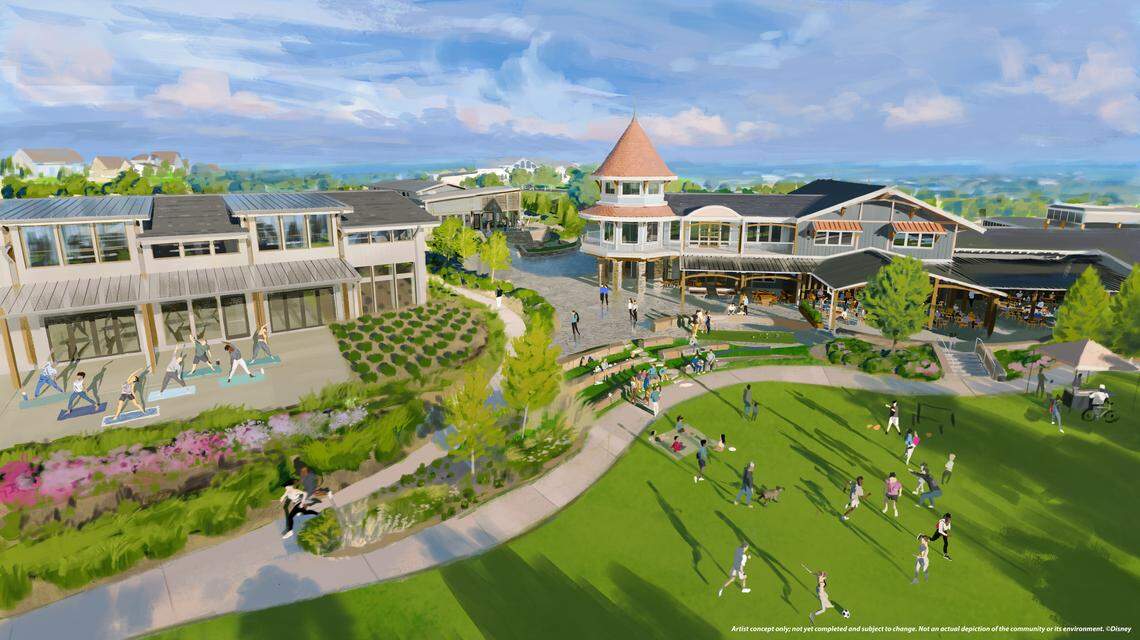
Planned near Pittsboro, Asteria will include roughly 4,000 homes spread across about 1,500 acres, forming a large-scale master-planned community designed around lifestyle, design, and curated experiences. While Disney has been gradually entering the residential space in other parts of the country, its move into North Carolina stands out because of both the timing and the location.
A Major Bet on the Triangle’s Future
The Asteria development is part of the broader Chatham Park vision, a long-term project that aims to transform a largely rural area into a fully built-out community capable of supporting tens of thousands of residents. At full scale, the area could eventually house as many as 60,000 people, effectively creating an entirely new population center just outside the traditional Triangle core.
That scale matters. It reflects not just a single development, but a shift in how growth is being absorbed across the region.
For years, demand has been concentrated in established markets like Raleigh, Durham, and Chapel Hill. But as those areas become more expensive and land becomes harder to develop, growth is increasingly pushing outward into surrounding counties. Chatham County, once considered a quieter, rural buffer, is now emerging as one of the Triangle’s most important expansion zones.
Disney’s entry into this market reinforces that trajectory.
What Makes This Development Different
Unlike a typical subdivision or apartment complex, Asteria is being designed as a master-planned community — meaning it will include not just housing, but also amenities, green space, and a structured community experience.
Disney has emphasized that the project will focus on wellness, outdoor living, and community design, reflecting a growing demand for neighborhoods that offer more than just homes. The company’s approach blends residential development with lifestyle branding, something it has already tested successfully in other states.
This type of development is becoming more common, especially in high-growth regions where buyers are looking for a combination of space, convenience, and quality of life. But Disney’s involvement elevates the concept, bringing a level of design consistency and long-term planning that few developers can match.
Why This Matters for the Housing Market
The implications of this project extend well beyond Chatham County.
First, it highlights the increasing role of institutional and large-scale developers in shaping housing supply. When a company like Disney commits to a project of this size, it signals strong confidence in long-term population growth and housing demand in the region.
Second, it underscores the growing importance of master-planned communities as a primary source of new housing. Instead of scattered developments, more supply is coming from large, coordinated projects that can deliver thousands of homes over time.
And third, it confirms that secondary markets are no longer secondary. Areas like Pittsboro are moving into the spotlight as affordability pressures and land constraints push development beyond traditional urban centers.
A Reflection of Broader Trends
The Asteria project fits into several larger trends shaping real estate across North Carolina and the U.S.
Population growth in the Triangle remains strong, driven by job expansion, migration, and a relatively favorable cost of living compared to other major metros. At the same time, housing demand continues to outpace supply in many areas, forcing developers to look for new land and new models of development.
Master-planned communities offer a solution to that challenge. They allow for large-scale, phased construction while also creating cohesive neighborhoods that can support long-term growth.
In that sense, Asteria is not just a standalone project — it’s part of a broader evolution in how housing is being delivered.
What to Watch Going Forward
As the project moves forward, it’s likely to have ripple effects across the region.
New developments of this scale tend to attract additional investment, including retail, infrastructure, and supporting services. Over time, that can reshape surrounding areas, influence property values, and create new pockets of demand.
It also raises important questions about affordability, infrastructure capacity, and long-term planning — issues that are already central to the Triangle’s growth conversation.