



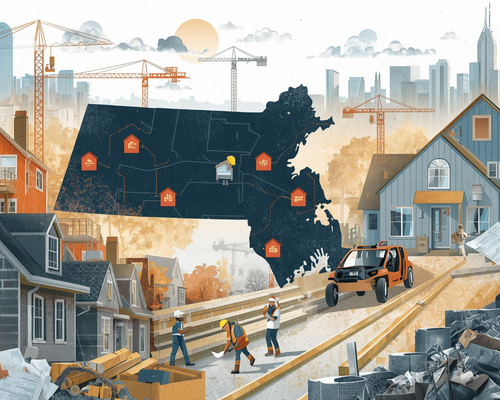
Massachusetts could face significant economic challenges over the next several years unless it finds a way to attract more workers and reverse slowing population growth, according to a new economic analysis that is drawing attention from business leaders, housing advocates, and construction industry professionals across the Commonwealth.
The report warns that Massachusetts is approaching a demographic crossroads. An aging population, declining birth rates, and slower migration trends are creating concerns about the future size of the state's workforce. Without additional workers entering the labor market, economists believe Massachusetts could experience slower economic growth and potentially begin losing economic momentum by the end of the decade.
For the housing industry, the warning carries particular significance.
Construction companies throughout Massachusetts have spent years struggling to find enough skilled workers to meet demand. Builders, developers, and contractors continue facing labor shortages that have complicated efforts to increase housing production at a time when affordability remains one of the state's biggest challenges. Industry leaders say a lack of workers is contributing to project delays, rising construction costs, and slower housing development timelines.
The labor issue comes as Massachusetts is simultaneously trying to address a severe housing shortage. State leaders have established ambitious housing production goals aimed at increasing supply and improving affordability, but meeting those targets will require a substantial construction workforce capable of building new homes, apartments, and mixed-use developments throughout the state. Recent housing reports have already identified labor shortages as one of the major obstacles slowing new construction activity.
Economists involved in the study argue that immigration has historically played an important role in supporting Massachusetts' labor force growth. According to the report, the state may need tens of thousands of additional immigrants by 2030 to offset demographic trends and maintain economic growth. Without that workforce pipeline, several key industries could face increasing pressure.
The concern extends well beyond construction. Healthcare providers, universities, life sciences companies, and other major employers are also closely monitoring workforce availability. Massachusetts has built its economy around highly skilled labor, research institutions, healthcare systems, and innovation-driven industries. Maintaining that competitive advantage depends heavily on attracting and retaining workers from both across the country and around the world.
Business leaders warn that housing affordability and workforce availability are becoming increasingly interconnected. High housing costs make it more difficult to recruit workers, while labor shortages make it harder to build the housing needed to improve affordability. The result is a cycle that many policymakers are now attempting to break through zoning reforms, housing initiatives, and workforce development programs.
Boston's economy continues to attract national and international attention because of its concentration of universities, research institutions, healthcare organizations, and technology companies. In fact, recent rankings placed Boston among the most attractive destinations for foreign investment in the United States due to its talent base and innovation ecosystem. However, analysts increasingly point to housing affordability and workforce shortages as long-term risks that could undermine that success if left unaddressed.
For real estate professionals, developers, and construction firms, the message is becoming increasingly clear. Solving Massachusetts' housing shortage will require more than financing, zoning reform, and development approvals. It will also require a workforce large enough to build the homes the state desperately needs.
As policymakers continue debating immigration, housing production, and economic development strategies, many industry leaders view the labor shortage as one of the most important issues facing Massachusetts. The state's ability to grow its workforce over the next several years may ultimately determine whether it can meet its housing goals, maintain economic competitiveness, and keep pace with demand in one of the nation's most expensive housing markets.
Discussion
Thoughts from readers and local market watchers.